

LIVING MESTIZAJE
COLOMBIA MESTIZA 11-DAY PRIVATE TOUR
“Living Mestizaje: The Fusion That Is Colombia”14 days / 13 nights
The following is a detailed 11 day private/guided tour of Colombia´s most iconic places. Even though Colombia is a really big country, this trip will show you the most important features of its history, culture and language. This tour includes a 10-hour Spanish course completely free to be given prior your trip. The idea behind this is to give you some Spanish knowledge to get by in the country, but also to use these Spanish lessons to give you all the historical and cultural background of the country before your visit.
Using mestizaje as the main theme on this trip you will discover Colombia in a whole different way like no other trip can offer. Latin American countries are the result of many years of mestizaje, this is not just a mestizaje of races, but a mestizaje of mentalities, religion, traditions, food, arts and music.
The main focus of this tour is to show you how the encounter of Indigenous, European, and African roots shaped Colombian identity through music, food, and religion. Each Spanish class will cover information regarding the trip and places you will visit, as well as, some language tips to speak during your trip.
Small group: max 8 guests + expert guide in history and anthropology
Best season: June–July or December–January
Detailed Itinerary
Day 1 – Arrival in Bogotá
VIP airport reception at El Dorado International.
Transfer to Galery Hotel Casa de la Luz historic district.
Short evening walk to admire street art that tells contemporary stories of mestizaje.
Welcome dinner: ajiaco bogotano (Indigenous potatoes + Spanish chicken + African-inspired cream & capers).
Accommodation: Hotel Casa de la Luz (La Candelaria).
Day 2 – Bogotá: Religion & Music Mestizaje
Gold Museum: Indigenous Muiscas and Spanish concepts of divinity.
San Francisco Church and the Virgin of Chiquinquirá (Catholic-Indigenous syncretism).
National Museum: African slavery and legacy exhibits.
Evening: Cumbia & mapalé dance class (African drums + Indigenous cane flutes + Spanish melodies).
Accommodation: same hotel.
Day 3 – Bogotá → Eastern Plains (Llanos Orientales)
Morning flight Bogotá → Yopal (45 min).
4×4 transfer to Hato La Aurora ecological cattle ranch.
Afternoon: coleo (llanero rodeo) and joropo harp class (European harp + Indigenous maracas + African rhythms).
Dinner: llanero grilled beef + hallacas wrapped in plantain leaves.
Accommodation: Hato La Aurora (comfortable ranch rooms).
Days 4 & 5 – Deep into the Llanos
Horseback riding through flooded savannahs.
Visit to a Sikuani Indigenous community and joropo origin myths.
Cooking workshop: cachapas, pisillo, carne a la perra.
Nighttime campfire with contrapunteo singing (Spanish poetic duels with Indigenous & African themes).
Day 5 afternoon: return flight Yopal → Bogotá.
Accommodation: Bogotá (night 5).
Day 6 – Bogotá → Medellín
Morning free or Paloquemao market visit (optional).
Midday flight to Medellín (55 min).
Museo de Antioquia (Botero) + Comuna 13 graffiti & hip-hop tour.
Dinner: bandeja paisa (the ultimate mestizo plate).
Accommodation: Diez Hotel (El Poblado).
Day 7 – Medellín & Guatapé
Pueblito Paisa + Guatapé and Peñol Rock excursion.
Evening: Colombian tango and urban music experience.
Accommodation: Medellín.
Day 8 – Medellín → Cartagena (revised day)
08:30 Transfer to Itagüí (30 min south).
Visit to Corazón de León Coffee Farm
Full coffee process tour (plant brought by Europeans, cultivated by mestizo & Indigenous hands).
Hands-on roasting and cupping + typical paisa snack (panela water, fresh cheese, pandequeso).
14:00 Private Yoruba-Colombian spiritual experience (Envigado/Sabaneta area)
Meeting with a respected babalorixa/babalawo in their casa-templo.
Explanation of Colombian santería/regla de ocha syncretism (Oshún = Virgen de la Caridad, etc.).
Live batá drum touches and lucumí chants.
Optional gentle cleansing with herbs and coconut water (respectful, no photos inside the altar room).
17:30 Quick return to hotel to pick up luggage.
18:15 Private transfer to José María Córdova Airport.
20:15–21:30 Evening flight Medellín (MDE) → Cartagena (CTG).
Arrival and private transfer to walled city hotel. Light dinner on your own in Getsemaní.
Accommodation: Casa Pestagua or similar (Historic Center).
Day 9 – Cartagena: Afro-Spanish Heart
Palace of the Inquisition + Getsemaní neighborhood walking tour (palenque heritage).
Champeta dance class (pure Afro-Caribbean rhythm).
Lunch at Portal de los Dulces (coconut sweets of African-Spanish origin).
Accommodation: Cartagena.
Day 10 – Cartagena & La Boquilla (Afro fishing village)
Canoe trip through mangroves with local fishermen.
Drum workshop: bullerengue, mapalé, currulao.
Lunch: coconut rice, fried fish in bijao leaf, patacones.
Evening: salsa choke & reggaetón class.
Accommodation: Cartagena.
Day 11 – Rosario Islands
Speedboat to a private island or Corales del Rosario National Park.
Snorkeling + talk on Indigenous Caribbean seafaring heritage.
Lunch: lobster & rondón (Afro-Antillean coconut rundown).
Accommodation: Cartagena.
Day 12 – Cartagena → Bogotá
Morning shopping in Las Bóvedas (Momposina filigree jewelry = Spanish technique + Indigenous design).
Afternoon flight back to Bogotá.
Farewell party at Andrés Carne de Res (Chía) – all Colombian rhythms in one night.
Accommodation: Bogotá.
Day 13 – Bogotá: Synthesis & Farewell
Monserrate Sanctuary and syncretic mass.
Final cooking class: tamal tolimense (Indigenous leaf + Spanish filling + African steaming technique).
Free time for coffee, emeralds, or crafts.
Closing dinner at Leo (innovative cuisine celebrating mestizaje).
Accommodation: Bogotá.
Day 14 – Departure
Private transfer to the airport. ¡Hasta pronto!
Included
All domestic flights (Bogotá–Yopal–Bogotá, Bogotá–Medellín, Medellín–Cartagena–Bogotá).
Private ground transportation & 4×4 in the Llanos.
Boutique hotels and high-standard ranch stay.
All meals mentioned + non-alcoholic drinks.
All music & cooking workshops.
Entrance fees and activities.
Bilingual specialist guide (mestizaje focus).
Basic travel insurance.
Price (per person, 2026 mid-season, group of 10–14)
USD $4,950 – $5,400 (double occupancy)
Single supplement: +$980
This journey doesn’t just show you Colombia — it lets you feel, taste, dance, and understand how three continents merged to create one of the world’s richest cultures. Ready to live the mestizaje?
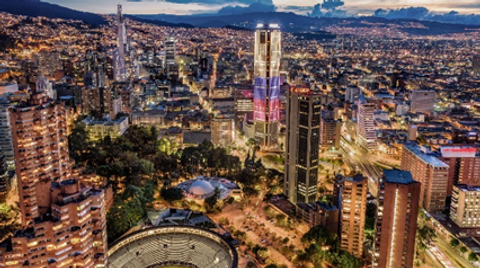

Day 2: On this day, you will wake up very early due to Jetlag, so the best thing to do is to hit the road and go on a mountain trek to Monserrate hill. You will walk up to the beginning of the Monserrate Trail and walk up the hill. You will then come back down by cable car or funicular. After Monserrate, You will get lunch and afterwards we will visit the city center and some of its most iconic places like: Journalist Square, Bolivar square, Museum of Botero and Gold Museum (if these museums are closed we will visit them next day after Zipaquirá). Then back to the Hotel for rest.
Day 3: In the morning a private car will pick you up at the hotel and will take you to the Salt Cathedral of Zipaquirá. This is a very beautiful road that will show you some of the nicest landscapes of Bogotá. After the Salt Cathedral you will visit the town center grab lunch and then go back to Bogota for a free afternoon/evening.


Day 4: On this day, you will take early flight to Pereira from El Dorado airport in Bogota. You will arrive mid-morning at Pereira and go for a quick tour of this beautiful city and its surrounding areas. Since we are in the coffee region, after the city tour of Pereira, we will go to the town of Salento and visit typical coffee farm. Here you will learn everything about coffee, its history and all processes involved in its production.
Day 5: This is a very special morning; You will get on a Jeep from Salento to the Valle de Cocora (valley of Cocora). Here, you will walk the valley and visit the iconic wax palm trees of Cocora, which is Colombia´s national tree and if you are lucky, you will have the chance to see the majestic Condor of the Andes the world´s biggest flying bird. (Horse ride to the valley is also possible but not included) After the valley we will go back to our hotel for a well deserve rest.


Day 6: On this morning, you will take a flight to go straight to Medellin. You will arrive at Medellin international airport around noon. After checking in, your guide will show you around the Poblado area and the Rose District. You will then have the rest of the day free and in the evening, you can go out to enjoy Medellin's night life
Day 7: Today is a great day in a great city. Today you will learn about one the most amazing transformation that any city has ever gone through. Medellín is a city that has been involved in the middle of two different wars, the war between the drug cartels and war between the guerrilla and the paramilitarism. In the morning, we will visit the downtown area for a 6km walk and in the afternoon, we will visit the popular Comuna 13.
Since Medellin is the seventh city with the best public transportation system in the world, our trip this day will be done in metro, bus and cable car. You will experience the city the same way most people do and will witness how modern and organized this city truly is.
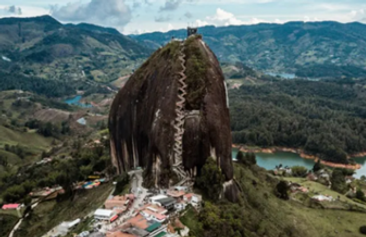
Day 8 : Early this morning you will take a car to go to the town of Guatape. The most colorful town of Colombia. Our first stop is at the Rock of El Peñol, a 200 mts rock that you will climb by going up 725 steps. After we will visit the town of Guatapé and then get on a boat to visit the lake of Guatapé and Pablo Escobar farm la Manuela. We will then go back to Medellin for a night rest.


Day 9: Today you will go on a Pablo Escobar tour and will visit the most iconic places related to this controversial character. You will begin by visiting the Inflexion Square a place dedicated to the victims of the drug conflict, then the cemetery where he is buried and then the Olivos neighborhood the place where he was killed. Immediately after the tour of Pablo, you will stop for lunch and then be transfer to the JMC airport to take the flight to Cartagena
Day 10: In the morning, we will do a city tour of the town center, the walled city, and the Getsemani neighborhood. In the afternoon You will visit the Castillo San Felipe
Day 11: Return flight to Bogotá. On this day you have several options, you can either flight back to Bogotá or go to a nice beach resort to rest near Caratagena for the rest of your holiday (you can arrange this by yourself or we can arrange it for you). You can also continue traveling with one of our extensions (Los Llanos, San Agustin, Norte de Santander etc) or just let us know when and from where are you flying to Bogotá and we will get that last flight for you
What´s Included:
· Bilingual Guide English/Spanish/French. Your guide will be with you throughout the tour 24/7. He will make sure that you are properly served and secured during the whole trip
· All domestic flights (4 domestic flights in total)
· All accommodation
· All Breakfasts and lunch.
· Snacks, lots of fruits and waters during the day
· All activities describe in the Itinerary
· All ground transportation
Not Included
· International flights
· Dinners
· Alcoholic drinks
· Entrance to night clubs
· Tips for guides.
PRICE:
For 1 Person Price: 3.500 Us dollars
For 2 People Price: 2.700 US dollars per person
For 3/4 people Price: 2.400 Us dollars per person
For 5/6 people price: 2.100 Us dollars per person
Regarding accommodation.
Throughout your tour, you will be staying in local family hostels. The idea behind this, is to help the Colombian families directly. So rather than staying in big fancy hotels where your money goes to big and rich corporations, you will be staying in lovely 3/4-star hostels run by local people. Community based tourism is the best way to help the people in the areas and communities you will be visiting.
Regarding meals:
All breakfasts and lunches are included. Normally you will have typical Colombian breakfast each activity and then lunch at sometime during the day. Since Breakfasts are normally served by the hotel and are normally salty, you will also have plenty of fruits and pastries every morning. During lunch you will have several options to chose from. We can accommodate vegetarians.
Regarding Transportation:
All domestic flights are included. There are a total of 4 flights:
Bogota – Pereira
Pereira – Medellin
Medellin – Cartagena
Your final location – Bogotá
All land transportation is also included and depending on the group size will be done either in Car or vans. On Medellin tour you will use public transportation, but a private car/van with drive can be hire. This of course will have an extra cost which is not included with the service.
Regarding the Spanish Lessons: With the purchase of the tour, you will receive 10 hours of Spanish lessons for free (250 euro value) before doing your trip. The idea is to give you some Spanish knowledge to get by in the country. Each Spanish class will cover information regarding the trip and places you will visit, as well as, some language tips to speak during your trip.
More on Mestizaje
Mestizaje, a term derived from the Spanish word "mestizo," refers to the blending of indigenous, European, and African cultures in Latin America. This process began with the arrival of Europeans in the 15th and 16th centuries and has since shaped the region's demographic, cultural, and social landscape. Mestizaje is not merely a historical phenomenon but a living and evolving aspect of Latin American identity.
Historical Background
The roots of mestizaje can be traced back to the colonial period when European settlers, primarily from Spain and Portugal, arrived in Latin America. The encounter between these settlers and the indigenous populations led to the intermingling of cultures, languages, and traditions. The forced migration of African slaves further contributed to the cultural mosaic, resulting in a unique blend that characterizes Latin American societies today.
Cultural Fusion
Mestizaje manifests in various aspects of Latin American life, including language, religion, art, and cuisine. Spanish and Portuguese are the dominant languages, but indigenous languages like Quechua, Aymara, and Nahuatl are also spoken, reflecting the region's multicultural heritage. Similarly, Catholicism, introduced by European colonizers, is often practiced alongside indigenous and African spiritual traditions, creating a rich tapestry of religious beliefs and practices.
The arts in Latin America are a vivid expression of mestizaje. The works of renowned artists like Diego Rivera and Frida Kahlo showcase a blend of indigenous and European influences. Music and dance, such as salsa, samba, and cumbia, also reflect this cultural fusion, combining African rhythms, European instruments, and indigenous melodies.
Social and Political Implications
Mestizaje has played a significant role in shaping national identities and social structures in Latin America. Many countries in the region celebrate their mestizo heritage as a symbol of unity and diversity. However, the process has also been marked by social and racial hierarchies. Historically, mestizos often occupied an intermediate position in the colonial caste system, which privileged Europeans while marginalizing indigenous and African populations.
In contemporary Latin America, mestizaje continues to influence social dynamics and political discourse. Movements for indigenous rights and social justice highlight the ongoing struggle for equality and recognition of the diverse cultural roots that constitute national identities.
Mestizaje is a defining element of Latin American identity, representing the fusion of diverse cultural heritages. It has shaped the region's history, culture, and social structures, creating a rich and dynamic tapestry that continues to evolve. By embracing their mestizo heritage, Latin American societies celebrate the complexity and richness of their cultural identities, while also acknowledging the challenges and inequalities that persist.
